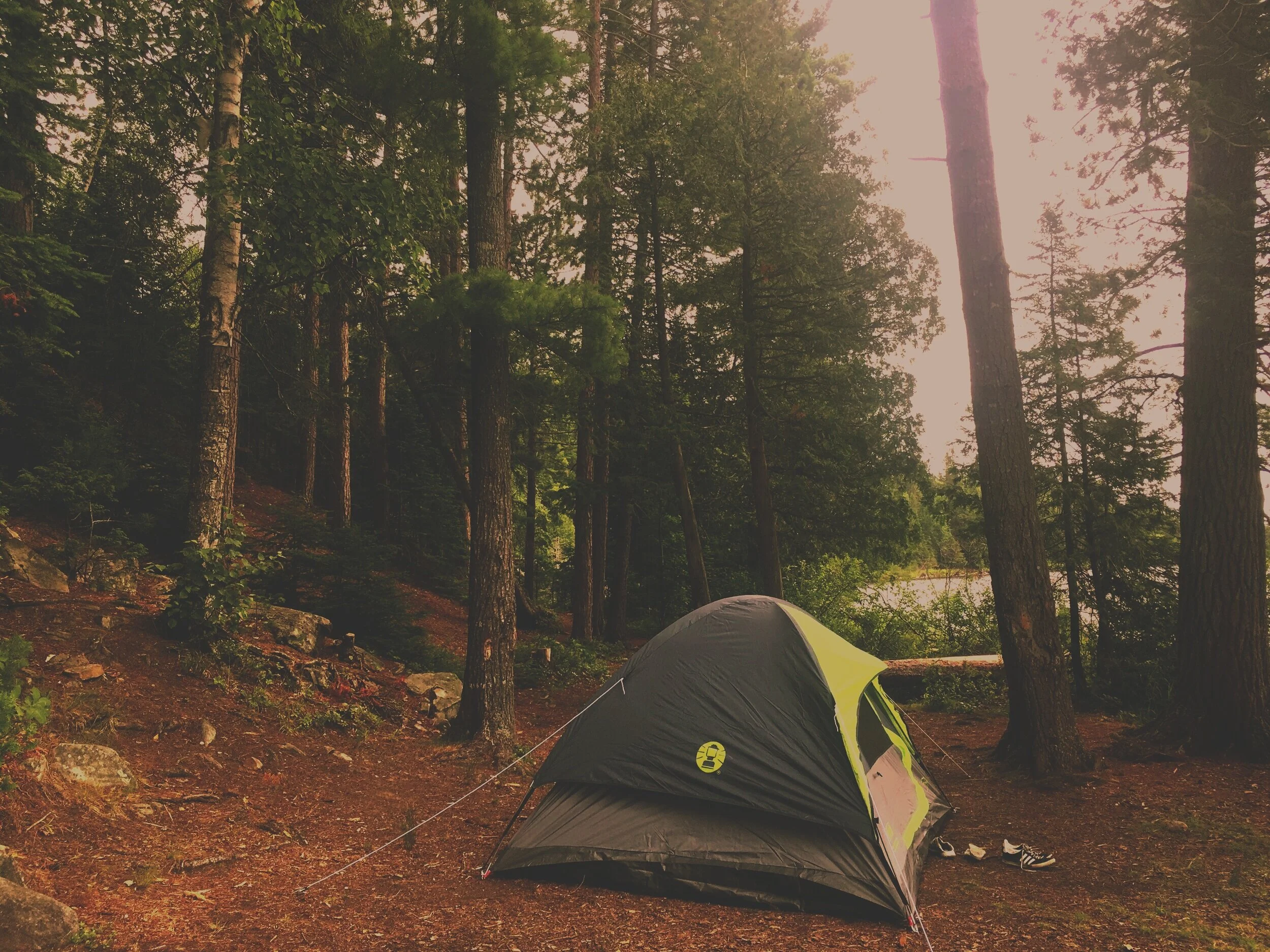
Never Been Camping?
No big deal.
A journey of a thousand miles begins with a call to Lake Fever Wilderness Co. Our overnight camping experiences out of Toronto are designed to accommodate both first time campers and seasoned veterans alike. Each camper will sit in on a short tent setup demo, be briefed on safety, and led on group hikes suitable for all fitness levels. Best of all, all camping equipment for trips (even sleeping bags!) are provided by us. Just bring a bag of clothes, and that pretty little head of yours. It couldn’t be easier to learn to camp
Want to learn what it takes to build a fire? How to canoe? No question is a stupid question. Be as immersed as you like. Your patient guide is there to assist, facilitate, and teach in all capacities. We’re all in this together, and Lake Fever is a wonderful place to meet new friends who are equally eager to put down their phones for a couple of days to experience life the way it was meant to be experienced…OUTDOORS!

Learn To Camp

Learn To Canoe

Setting Up Camp - A Group Effort
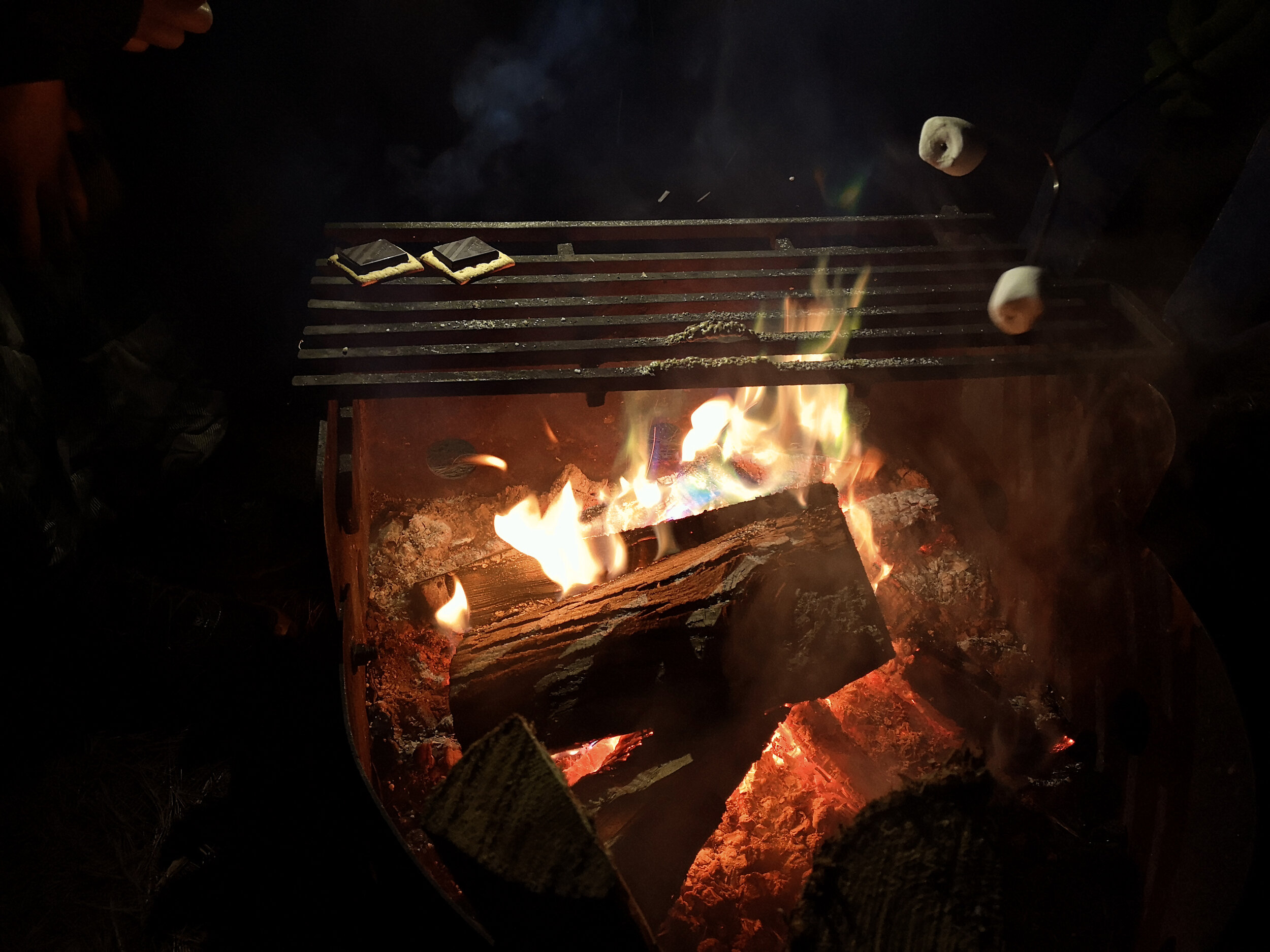
Make Your Own S’mores

‘New To Camping Fears’ FAQs
It’s okay to be nervous. Nearly every new camper comes in with their own set of worries that probably seem quite daunting at first. Let’s go over some typical concerns newbies sometimes have…
Will my canoe tip? I don’t know what I’m doing.
Despite your fear that you are in fact the worst paddler out there, and that you will definitely fall in, believe me when I tell you, it is rare. You are much more capable than you give yourself credit for. Not only that, but you will be given ample instruction to make yourself feel comfortable out there on the water. We’ve had literally hundreds of guests panic about tipping over, and because of this perceived lack of confidence, canoeing ended up being the most rewarding part of the trip for many of these people. Turn your greatest fear into your greatest success!
I can’t swim. Will I still be able to enjoy the water?
Many non-swimmers have attended our tours, but that certainly didn’t stop them from getting in the water. Most, if not all, beaches that we frequent on our tours stay shallow for a fair distance, and shallow ends are usually sectioned off with ropes. In backcountry situations, our non-swimmers often simply choose to keep on their life jackets when they hop off the pier and take off into the lake.
Will a bear eat my face while I’m asleep?
Algonquin has many bears, true. And while (without fail) you’ll always see a scary sign at your campground saying “Bear In The Area,” in years of camping, I personally have yet to see a bear in any campground. It may also help you to note that in the last 100 years, there have only been 4 fatal bear attacks in Ontario, Canada. After a few days in the wild, most campers only wish they’d seen a bear.
Isn’t camping basically men grilling a ton of meat? Will I have anything to eat with my dietary restrictions?
For anyone who’s ever found themselves eating a hamburger bun for dinner because a tour company hasn’t bothered to include everyone’s requirements in their meal selection, we totally get it. At Lake Fever, we understand that dietary restrictions aren’t optional, and you shouldn’t feel bad about what you can’t eat, or worse, what you believe in - it’s a part of who you are. Here, we’re all about EOE (‘Equal Opportunity Eating’), and consider it an absolute priority to design our tour menu NOT to suit all ‘preferences,’ but to suit ANY AND ALL ‘restrictions’ (vegan, gluten-free, lactose intolerance, etc.). As a result, we ended up with a well-rounded, highly adaptable, and health-conscious menu for your Toronto summer camping trip.
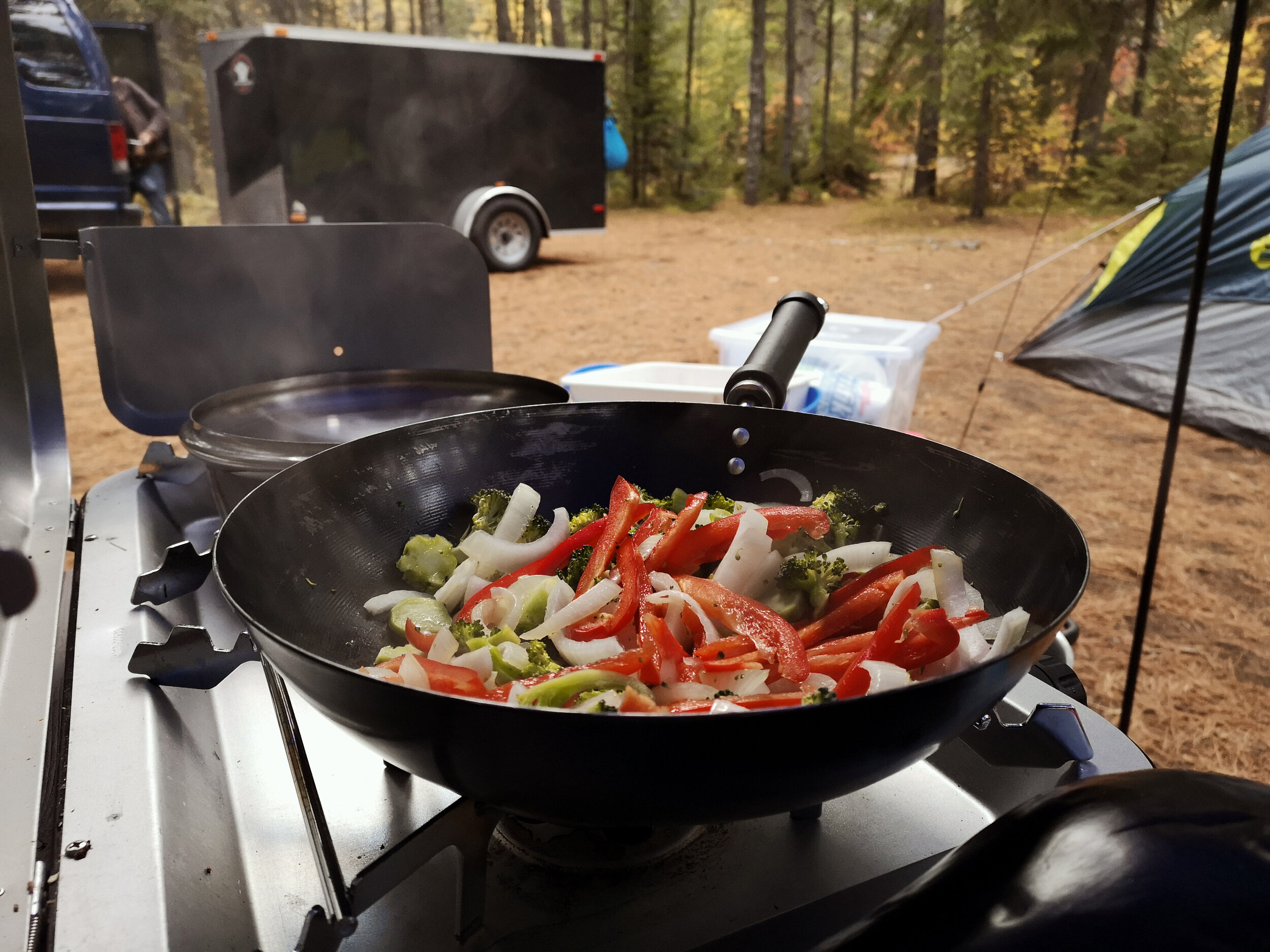
As of 2022, Lake Fever’s menu is proudly Ontario’s one and only exclusively vegan/vegetarian-based camping tour meal plan.
*No meat or seafood products will be served on any trip (with the exception of individually-ordered restaurant meals). Not to worry, our menu has dazzled the tastebuds of vegans and carnivores alike!